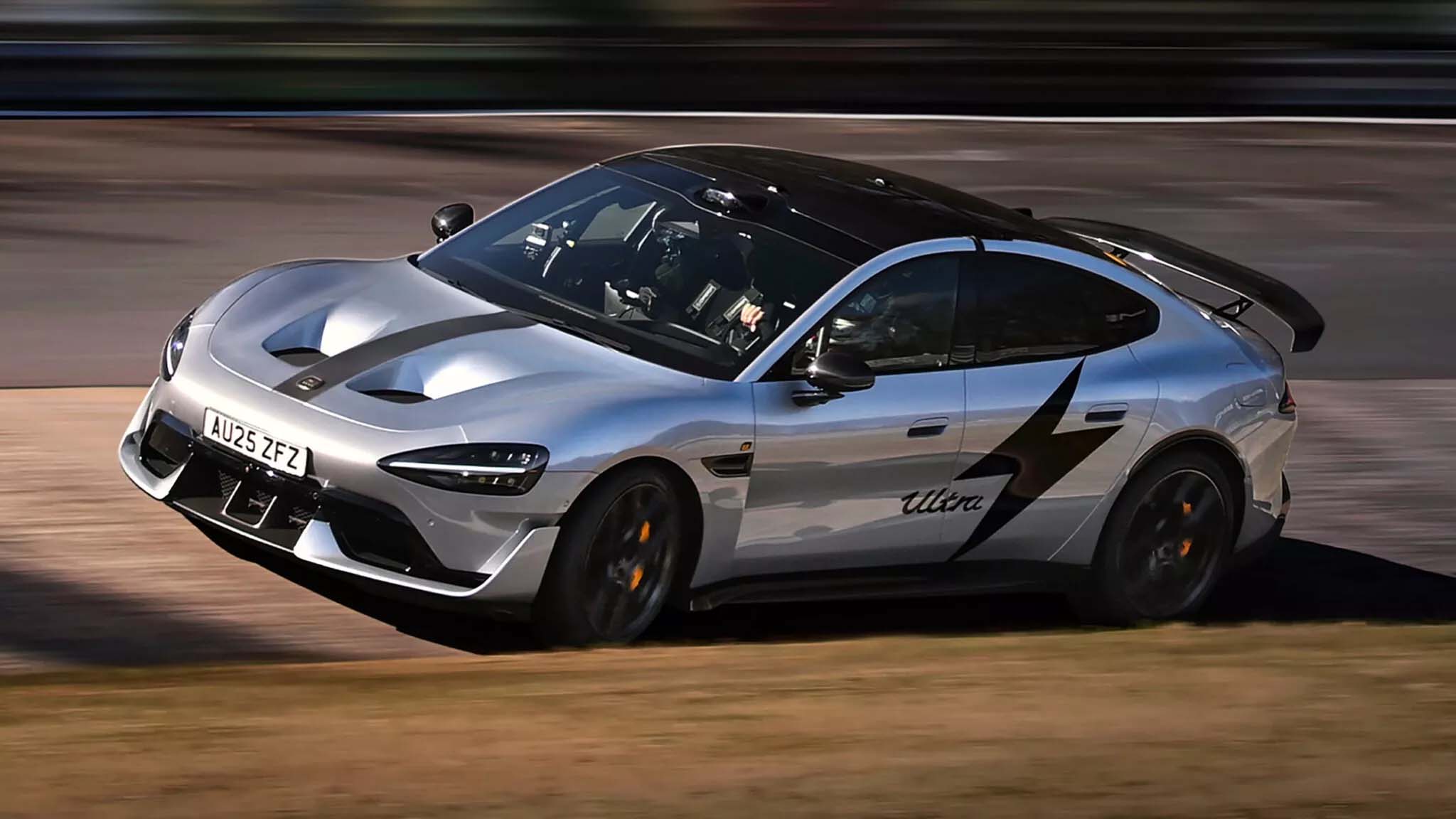
The most common first reaction to the Xiaomi SU7, in any language, is the same: "it looks like a Porsche." The long bonnet, the low teardrop roofline, the haunches over the rear wheels — the family resemblance to the Taycan is not subtle, and the internet noticed within minutes of the March 2024 reveal. What is more interesting than the resemblance is why it exists, and where, on closer inspection, it deliberately ends.
The people behind the shape
Xiaomi did not hand its first car to phone designers. The exterior was led by Li Tianyuan, previously a designer on BMW's i division, supported by a team recruited from German premium studios. Their brief, by CEO Lei Jun's own telling, was unapologetically benchmark-driven: study the cars people dream about, then build one that undercuts them. Lei stood on stage and compared the SU7 to the Taycan and the Model S by name. In a culture where most launches drown in vague superlatives, the transparency was almost disarming — Xiaomi never pretended the references weren't there.
Physics pushes everyone together
Part of the resemblance is simply what aerodynamics does to a fast electric sedan. The SU7's drag coefficient of 0.195 makes it one of the slipperiest production cars ever made, and the recipe for that number — low nose, curved roof, pinched tail, flush handles — is the same recipe Porsche, Lucid and Mercedes arrived at. Electric packaging pulls in the same direction: no engine to house, a flat floor to hide, wheels pushed to the corners. Design convergence is real, and it is strongest exactly in this class. Porsche's own design chief, asked about the SU7, responded with diplomatic amusement rather than lawyers — perhaps, he suggested, good ideas simply think alike.
Where Xiaomi diverges
Step inside and the borrowing stops. The SU7's cabin is organised around Xiaomi's HyperOS and a physical ecosystem no rival can match: magnetic mounting points for Xiaomi tablets and accessories, seamless handoff between phone, home and car, and a hardware bar of real buttons beneath the screen — a quiet rebuke to the all-touch orthodoxy. This is the actual design thesis of the car: not "a Chinese Porsche" but the first vehicle designed as a native citizen of a consumer-electronics ecosystem, by the company that owns that ecosystem. The lifestyle colour palette, the emphasis on chargeable accessories, the app-store logic of the cockpit — none of it comes from Stuttgart.
Familiarity as strategy
There is also a colder reading, and it is probably the correct one. A first-time carmaker asking families for 200,000-plus yuan needs to eliminate every possible reason to say no. A shape the eye already accepts as beautiful — because a slower, six-times-more-expensive German car taught it to — removes the biggest risk in car design for free. Xiaomi spent its novelty budget where it shows up in use, not in the showroom silhouette. The market has rendered its verdict on the trade-off: tens of thousands of orders locked within the first day, waiting lists stretching months, and an Ultra version that went on to set production-EV lap records at the Nürburgring. Plenty of brands have accused Chinese cars of borrowing their looks. The SU7 is what happens when the borrowing is confident, selective and paired with something the original cannot copy back.
无论在哪种语言里,人们看到小米 SU7 的第一反应几乎相同:「这不是保时捷吗?」修长的前舱、低伏的水滴形车顶、后轮上方隆起的臀线——它与 Taycan 的神似毫不含蓄,2024 年 3 月发布后几分钟内互联网就炸了锅。但比「像」更有意思的问题是:为什么像,以及仔细看时,它在哪里刻意地不像了。
造型背后的人
小米没有把第一台车交给手机设计师。外观设计由曾任职宝马 i 系列的李田原主导,团队成员多来自德国高端品牌设计室。按雷军自己的说法,设计任务书就是毫不掩饰的对标:研究人们梦想中的车,然后造一台价格砍半的。雷军在发布会上直接点名对比 Taycan 与 Model S。在一个大多数发布会淹没在空洞形容词里的行业,这种坦率近乎缴械——小米从未假装那些参照不存在。
物理规律让大家殊途同归
相似的一部分原因,是空气动力学对高性能电动轿车的塑造。SU7 的风阻系数低至 0.195,是有史以来最「滑」的量产车之一,而实现这个数字的配方——低车头、弧形车顶、收窄的车尾、隐藏式门把手——正是保时捷、Lucid 和奔驰共同抵达的配方。电动车的布局逻辑也在推动趋同:没有发动机需要安置,平整的电池地板需要遮掩,车轮被推向四角。设计趋同是真实存在的,而且恰恰在这个级别最强烈。被问及 SU7 时,保时捷设计总监的回应是外交式的幽默而非律师函——他说,也许好的想法总是不谋而合。
小米真正不同的地方
坐进车内,「借鉴」戛然而止。SU7 的座舱围绕澎湃 OS 和一个对手无法复制的硬件生态组织:小米平板与配件的磁吸拓展点、手机—家居—汽车的无缝流转、屏幕下方一排实体按键——对全触屏教条的无声反驳。这才是这台车真正的设计论点:它不是「中国保时捷」,而是第一台作为消费电子生态原生公民而设计的汽车,出自拥有这个生态的公司之手。生活方式化的配色、可充电配件的强调、座舱的应用商店逻辑——这些都不来自斯图加特。
熟悉感本身就是战略
还有一种更冷静的解读,而它大概才是正确答案。一家首次造车的公司要让家庭掏出 20 多万元,就必须消灭一切说「不」的理由。一个眼睛早已认定为美的造型——因为一台慢一些、贵六倍的德国车早已完成了这场审美教育——零成本地移除了汽车设计中最大的风险。小米把「新」花在了使用中能感知的地方,而不是展厅里的剪影上。市场已对这笔交换给出裁决:上市首日锁单数以万计、等车周期以月计,Ultra 版本随后在纽博格林刷新量产电动车圈速纪录。许多品牌都指责过中国车借鉴它们的外观。而 SU7 展示的是:当借鉴足够自信、足够克制,并且配上一样原创者无法反向复制的东西时,会发生什么。