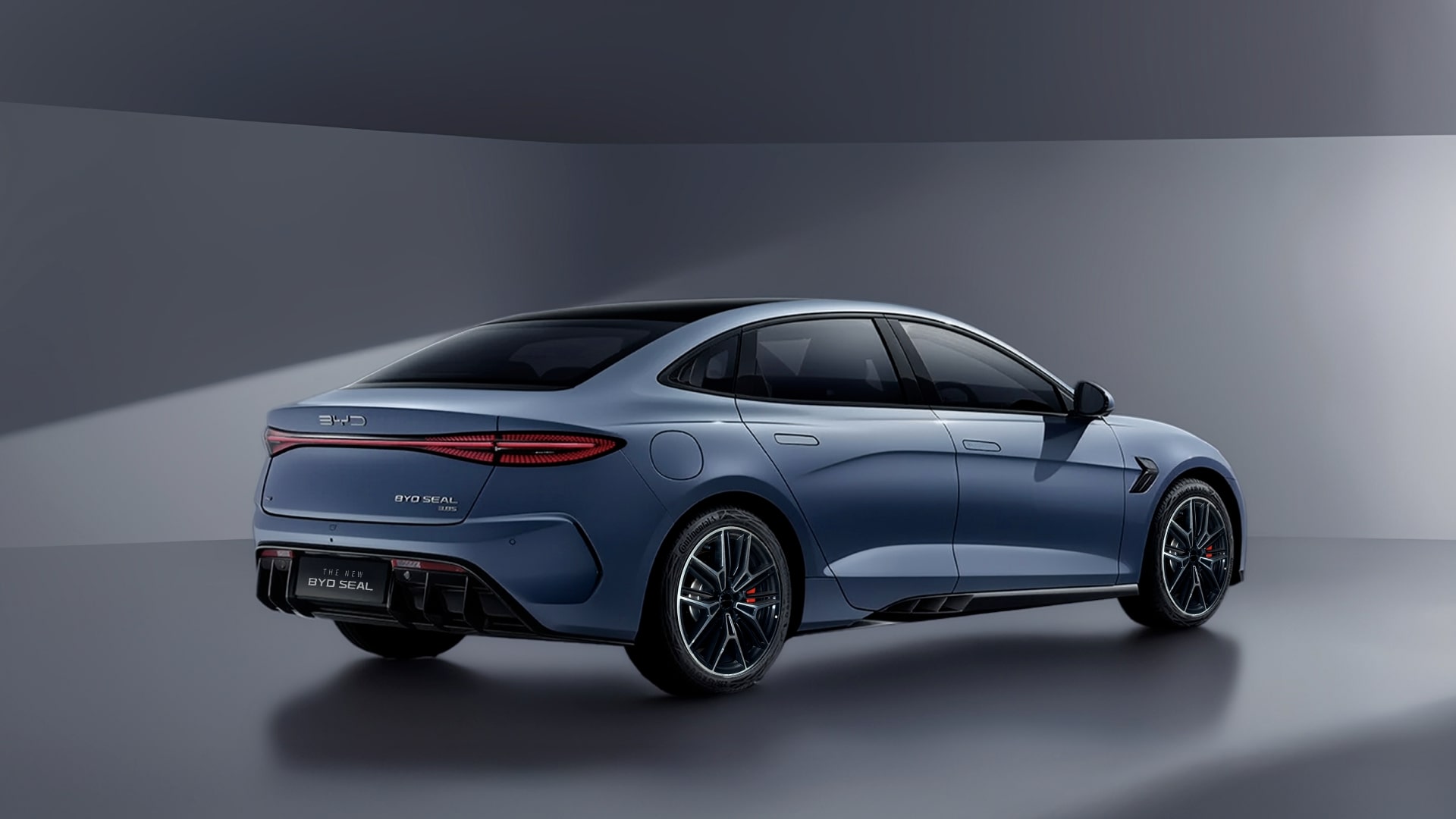
More than half of every lithium-ion EV battery made on Earth now comes from just two companies, both Chinese: CATL and BYD. Add the rest of China's pack makers — CALB, Gotion, EVE, Sunwoda — and the country's share of global production comfortably clears two thirds. No other layer of the automotive industry is this concentrated, and none matters more: the battery is roughly a third of an electric car's cost. Whoever controls it controls the price of the car.
That control did not happen by accident, and it did not start at the factory gate. It was engineered over two decades, layer by layer, from the mine to the module.
Start at the rock
China itself mines a modest share of the world's lithium, cobalt and nickel. What it does is refine them. Roughly two thirds of the world's battery-grade lithium and cobalt is processed in Chinese refineries, and for battery-grade graphite — the anode in nearly every cell — the share is higher still. Chinese firms spent the 2010s buying what geology denied them: Tianqi Lithium took a major stake in Chile's SQM and Australia's Greenbushes mine; CMOC bought the Tenke Fungurume copper-cobalt complex in the DRC; CATL led a multi-billion-dollar nickel project in Indonesia. When Western automakers went shopping for battery metals in the 2020s, they discovered the shelves had been quietly reserved years earlier.
The greenhouse years
Downstream, the story is one of deliberate industrial policy. Beijing began subsidising electric vehicles in 2009 and, crucially, from 2015 tied those subsidies to a "white list" of approved battery suppliers that excluded the Korean and Japanese incumbents. For four formative years, LG, Samsung SDI and Panasonic were effectively locked out of the world's largest EV market. Inside that greenhouse, CATL — spun out of the Apple supplier ATL only in 2011 — grew from a start-up into the world's largest battery maker. The white list ended in 2019, but by then the game had changed: scale, cost and an entire domestic ecosystem of cathode, anode, electrolyte and separator producers now sat within a day's drive of the cell plants.
The LFP counter-revolution
China's second masterstroke was chemical. While Western and Korean makers chased ever-higher nickel content, Chinese engineers rehabilitated lithium iron phosphate — LFP — a chemistry the industry had written off as too low in energy density. BYD's Blade battery in 2020 and CATL's cell-to-pack designs clawed back that deficit at the pack level, while keeping LFP's advantages: no nickel, no cobalt, better thermal stability, longer cycle life and a dramatically lower cost per kilowatt-hour. LFP went from an also-ran to the majority chemistry in China's market, and it is the single biggest reason Chinese EVs reached price parity with petrol cars first. Tesla, Ford and Stellantis all now buy or license Chinese LFP technology.
Speed as a moat
The less visible advantage is iteration speed. A cathode tweak that takes a Western supplier a year of qualification can move from lab to production line in a quarter in Ningde or Shenzhen, because the customer, the equipment maker and the materials plant are often in the same city. That cadence produced fast-charging LFP cells, sodium-ion batteries for entry-level cars, and the semi-solid-state packs now appearing in premium Chinese models — each commercialised while competitors were still publishing roadmaps.
What it means if you buy or import Chinese EVs
For dealers and fleet buyers, the supply chain story translates into three practical facts. First, cost: Chinese-built EVs carry a structural battery-cost advantage measured in thousands of dollars per car, which is why they undercut rivals even after tariffs. Second, durability: LFP packs tolerate daily 100% charging and routinely outlast the vehicles around them — a meaningful argument in fleet economics. Third, continuity: the same two suppliers dominate cells for nearly every brand in this guide, from BYD to Zeekr to Volvo, so parts and chemistry expertise travel well across markets. The battery was the hardest part of the electric transition. China solved it first — and that, more than any badge or spec sheet, is what the rest of the industry is now racing to catch.
如今全球每生产两块车用锂电池,就有一块以上出自两家中国公司:宁德时代与比亚迪。再加上中创新航、国轩高科、亿纬锂能、欣旺达等厂商,中国占全球动力电池产量的份额稳稳超过三分之二。汽车产业没有任何一个环节像电池这样高度集中,也没有任何一个环节如此关键——电池约占一台电动车成本的三分之一。谁掌握电池,谁就掌握整车的定价权。
这种掌控并非偶然,也不是从工厂大门口开始的。它是二十年间从矿山到模组、一层一层构建出来的。
从矿石说起
中国本土的锂、钴、镍开采量并不算大,但精炼几乎都在中国完成:全球约三分之二的电池级锂和钴在中国冶炼加工,而几乎每块电芯都要用到的电池级石墨,中国份额更高。整个 2010 年代,中国企业在全球买下了地质条件没有给予的资源:天齐锂业入股智利 SQM 与澳洲 Greenbushes 锂矿;洛阳钼业收购刚果(金)的 Tenke Fungurume 铜钴矿;宁德时代主导了印尼数十亿美元的镍项目。当西方车企在 2020 年代出门采购电池金属时,才发现货架早在多年前就被悄悄预订了。
温室培育的岁月
在下游,这是一个产业政策精心布局的故事。中国从 2009 年开始补贴电动车,更关键的是 2015 年起将补贴与动力电池「白名单」挂钩,把韩日巨头挡在门外。在那关键的四年里,LG、三星 SDI 和松下实际上被隔离在全球最大的电动车市场之外。在这座温室里,2011 年才从苹果供应商 ATL 分拆出来的宁德时代,从创业公司成长为全球最大的电池制造商。白名单 2019 年取消,但格局已定:规模、成本,以及正极、负极、电解液、隔膜的完整本土生态,全部聚集在电芯工厂一天车程之内。
磷酸铁锂的翻身仗
中国的第二记妙手在化学层面。当欧美韩厂商追逐越来越高的镍含量时,中国工程师让被业界判了「死刑」的磷酸铁锂(LFP)重获新生。2020 年比亚迪刀片电池与宁德时代 CTP 技术在电池包层面补回了能量密度的差距,同时保留了 LFP 的全部优势:不用镍、不用钴、热稳定性更好、循环寿命更长、每千瓦时成本大幅更低。LFP 从边缘技术变成中国市场的主流化学体系,也是中国电动车率先实现油电同价的最大功臣。如今特斯拉、福特、Stellantis 都在采购或引进中国的 LFP 技术。
速度本身就是护城河
更隐性的优势是迭代速度。一次正极配方调整,西方供应商可能需要一年验证,而在宁德或深圳,从实验室到产线往往只要一个季度——因为客户、设备商和材料厂常常就在同一座城市。这种节奏孕育了快充 LFP 电芯、面向入门车型的钠离子电池,以及正在高端车型上量产的半固态电池——每一项都在竞争对手还在发布路线图时就已商业化。
对进口商和买家意味着什么
对经销商和车队买家,这条供应链故事落到三个实际结论。其一是成本:中国产电动车带着以千美元计的结构性电池成本优势,这是它们在关税之后依然更便宜的根本原因。其二是耐用性:LFP 电池可以天天充满、循环寿命普遍超过整车寿命——这在车队经济账里分量很重。其三是延续性:从比亚迪到极氪再到沃尔沃,本站收录的几乎所有品牌都由同样两家供应商主导电芯供应,配件与技术经验在各市场之间高度通用。电池曾是电动化转型中最难的一环。中国最先解决了它——这一点,比任何车标或参数表都更能解释今天的行业格局。